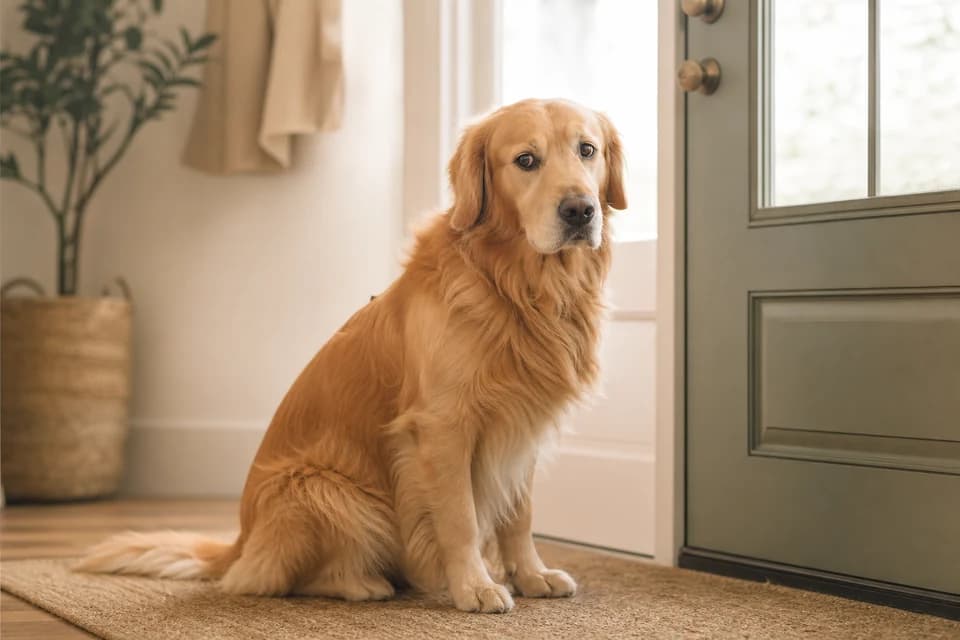
Restlessness by the door, lip licking, refusing to eat — anxiety often shows up hours before the trigger. Here’s how to read the early signs and calm the spiral.
You haven’t picked up the leash yet. But your dog is already pacing. Ears pinned back. Panting like they just ran a lap. The walk hasn’t even started — and somehow, they’re already exhausted.
This isn’t drama. It’s anticipation anxiety — and it’s far more common in Indian apartment dogs than most owners realise. Hot corridors, elevator waits, unfamiliar dogs on narrow paths: the walk itself isn’t the only stressor. The build-up is.
The signs most people miss
- Yawning when nothing is boring — a classic displacement signal
- Whale eye (showing the whites) when you reach for shoes or keys
- Refusing food 30–60 minutes before walk time
- Over-the-top greeting when you return — not joy, but relief
- Scratching at the door before you’ve said the word "walk"
Why routine makes it worse
Dogs are pattern machines. If walks always happen at 7am and 6pm, your dog’s nervous system starts preparing at 6:45. The fix isn’t skipping walks — it’s breaking the predictability loop without breaking the habit entirely.
Try varying departure cues: pick up keys and sit down. Touch the leash, then make tea. Leave through a different door once a week. Small unpredictability teaches the brain that "keys" doesn’t always mean "stress event incoming."
What actually helps before you step out
- Sniff mat or lick mat for 5 minutes before leashing — redirects focus to nose and tongue
- A properly fitted harness (not a collar pulling on the throat) reduces physical stress signals
- Short decompression sniff-walks on quiet streets before the main route
- Cooling gear in summer — overheating amplifies anxiety and looks identical to panic
When to go deeper
If your dog freezes in elevators, lunges at every passing scooter, or vomits before leaving — that’s beyond pre-walk jitters. A certified behaviourist can map triggers you can’t see from inside the pattern. Gear helps. Understanding helps more.
The goal isn’t a dog who tolerates walks. It’s a dog who stops dreading them before they begin.