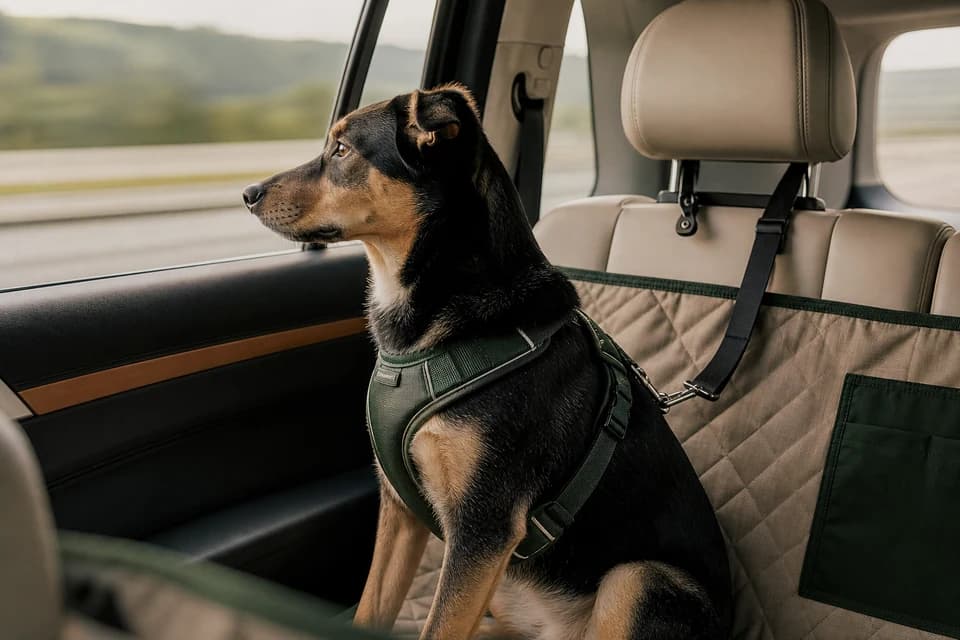
Loose dogs in cars are projectiles at 40 km/h. Harnesses, carriers, hydration, and the stop-every-90-minutes rule — for highway trips and vet runs alike.
Your dog sits in the back seat, head out the window, tongue flying. It looks free. At 60 km/h with a sudden brake, a 15 kg dog becomes a 600 kg force. The window thing isn’t freedom — it’s an eye injury waiting for a passing truck’s mirror.
Most Indian pet parents don’t use car restraints. Not because they don’t care — because nobody explained what "safe" actually means in a moving vehicle.
Harness vs carrier: pick one, use it every time
Crash-tested harnesses attached to seatbelt anchors work for calm medium-to-large dogs who can sit or lie down. Carriers bolted or seatbelted work better for small dogs and cats — enclosed space reduces visual stress from traffic.
- Never attach a collar to a seatbelt — neck injuries are guaranteed in a hard stop
- Back seat only; airbags deploy into the front passenger space
- Test the harness on short trips before a 6-hour highway run
- Carriers need ventilation on three sides minimum — Indian summers kill faster than crashes
The 90-minute rule
Stop every 90 minutes. Water, short walk, toilet break. Dogs don’t hydrate well in moving cars — offer water at stops even if they refuse in the vehicle. Never leave a dog in a parked car, even "just five minutes." Chennai, Pune, Delhi — the interior hits 50°C faster than you think.
Motion sickness is real and fixable
Drooling, lip licking, vomiting 20 minutes in — that’s not nerves alone. Travel on an empty stomach for the first few trips. Crack windows for airflow (not heads-out). Some dogs need vet-prescribed anti-nausea for long journeys. Shame-free.
Pack like you mean it
- Collapsible water bowl and 1L bottled water from home — unfamiliar water upsets stomachs
- Familiar blanket or bed liner; smell is the primary calming tool
- Leash accessible before you open any door — rest stops are escape risks
- Copy of vaccination records for interstate toll checks and pet-friendly hotels
- Waste bags, enzyme cleaner, one extra towel — the obvious things you’ll forget
The goal isn’t a dog who loves the car. It’s a dog who arrives intact, hydrated, and calm enough to enjoy wherever you’re going.